










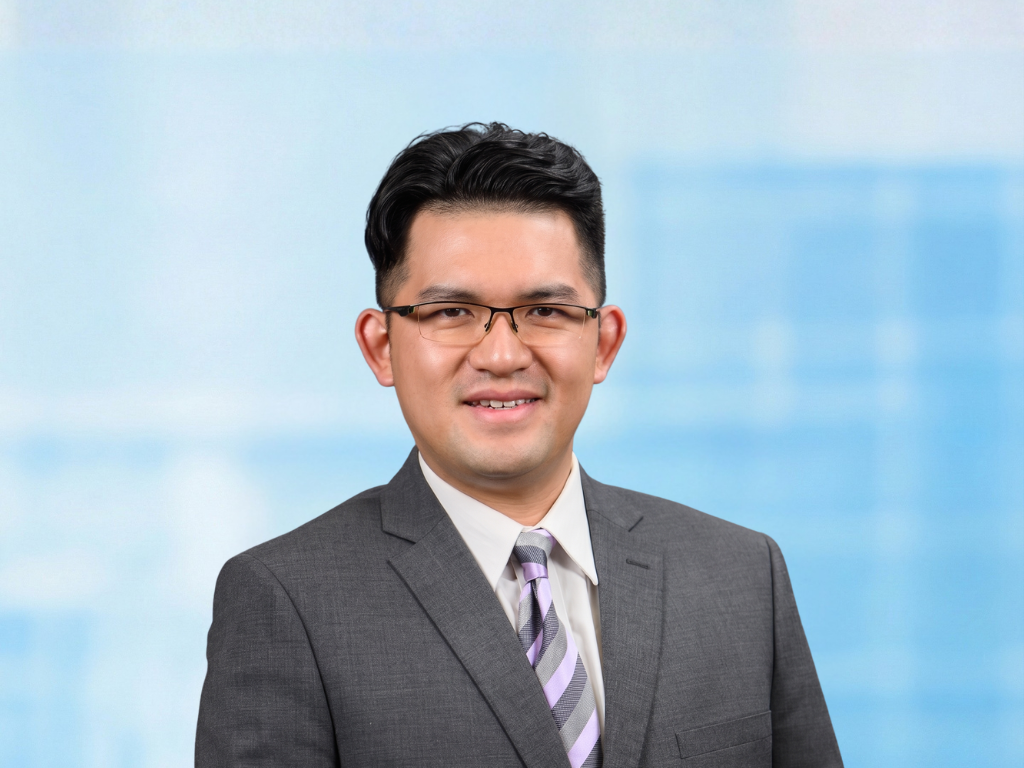
In a market where industries shift faster than ever, staying in one lane can quickly become a risk. For Jason Woo (HKUST Part-Time Weekly MBA Intake 2025), five years in logistics and supply chain were enough to see that change coming. Today, he’s stepped into a new role in Tech and AI Product Enablement—powered by the knowledge, perspective, and network he built through the HKUST MBA. Here’s how he made the move, and what it took to open new paths beyond his original field.
Taking Ownership of Career Growth
As a logistics and supply chain professional, Jason saw how quickly technology disruption, geopolitical shifts in demand, and organizational restructuring were no longer rare.
I understood that I cannot depend on any company to be responsible for my growth, Jason reflected. I really need to be responsible for my own career growth and career path myself.
While he considered various professional certifications like a Project Management Professional (PMP), he ultimately chose an MBA to avoid becoming too narrowly focused. The HKUST program specifically stood out to him because his first manager, a respected professional role model, was an alumnus. Furthermore, the part-time weekly format allowed him to continue providing for his family and maintaining his financial stability while elevating his education.
Bridging the Gap Through Structured Learning
A common debate questions the relevance of an MBA in an era increasingly dominated by artificial intelligence. However, Jason found that the program provided a critical, structured environment for mastering these very tools. Before joining the HKUST MBA, his experience with AI was largely limited to basic administrative tasks like proofreading documents.
The curriculum pushed him out of his comfort zone, particularly during rigorous courses like Strategic Management and Management Consulting led by Professor Chris Doran. In these classes, Jason and his cohort were tasked with utilizing generative AI to develop new market products and solve complex business problems for C-level pitches.
If you don't take a course like MBA or something like that, the learning is not structured, Jason noted. A lot of people, they learn AI in a very fragmented manner. The MBA program allowed me to adapt AI and learn AI in a structured and also, in a team-setting manner.
This rigorous environment offered a stark contrast to the self-taught methods many professionals currently rely on. This comprehensive approach acted as a powerful tool to get acquainted with emerging technologies, moving him away from piecemeal knowledge and equipping him with the practical frameworks needed to become a domain professional in his new tech-focused capacity.
The Power of Community and Shared Intent
Although he arrived with stories of the intense academic rigor at HKUST, Jason found that the challenge was met with an equally powerful support system. He discovered that his peers were incredibly open, sharing their expertise across complex subjects like accounting and finance. "People are actually willing to pour their heart out on certain issues when you ask them at the right time," Jason noted, adding that his peers were highly open to building authentic friendships.
Collaborating with a diverse cohort significantly expanded his understanding of leadership. "Before the MBA, my understanding of business and leadership is really about my immediate role, my manager," he explained. "I can only see what is in front of me." By discussing real-world challenges with classmates from varied backgrounds, he was able to mix those classroom insights with his workplace experiences. This allowed him to define the specific type of strategic leader he wanted to become and demonstrate a broader, executive mindset to his superiors.
The intent for the group is very similar, where we want to come together, we want to develop career, we want to learn, and to grow together.
Advice for the Next Generation of Innovators
When asked about his biggest takeaway for prospective students dreaming of moving from traditional industries into the tech sector, Jason advises prioritizing timing as a strategic asset: do not wait too long. He suggests that while a transition is possible at any stage of one’s career, embarking on this journey with five years of experience allows for a particularly fluid integration, as professionals are well-positioned to bridge their foundational skills with the evolving demands of the tech landscape. He also urges students to remain curious, speak extensively with alumni and professors, and actively find the commonalities between their existing skills and current market trends.
Ultimately, Jason’s journey underscores the true value of modern business education.
My professional identity isn't tied to any one specific industry, he shared. But rather, I look for fields with high growth potential, and where I can reapply my skills, reapply my knowledge, reapply what I learn from the program to those new industries as I move.